NVKE: NVIDIA's Open GPU Kubernetes Engine

This guide is a companion to NVKE: NVIDIA's Open GPU Kubernetes Engine (283s, uploaded 2026-11-17), and the video is the starting point for everything below. This article is a decision-guide plus docs walkthrough only, grounded by the Prag research folder (LEDGER.md, research/SOURCES.md) for this video. One honesty note up front: auto-subtitles for the video were blocked by a 429 rate limit at draft time, so the owner-written description serves as the record of what the video covers. The bench had no Docker host, so nothing here is claimed as a local run, and anything not executed is marked untested rather than stated as fact.
What NVKE actually is
- In the video: NVIDIA published its own Kubernetes engine, and it is open source, but it does not replace your cluster. It is a factory that stamps out whole Kubernetes clusters for GPU servers.
- Added from the sources: the correct repo is dsx-ai-factory/nvke, under the DSX AI Factory org rather than the main NVIDIA org, created 2026-08-04 and carrying an Apache-2.0 license confirmed live via the GitHub API at draft time.
- In the video: the release on camera is
v0.23.1, tagged November 3, which the releases page corroborates. - Added from the sources: NVKE is not a distro and not a K3s or k0s replacement. It is an open-source management plane for running a managed Kubernetes service on your own bare-metal NVIDIA GPU infrastructure, per the NVKE docs home.
How the factory works
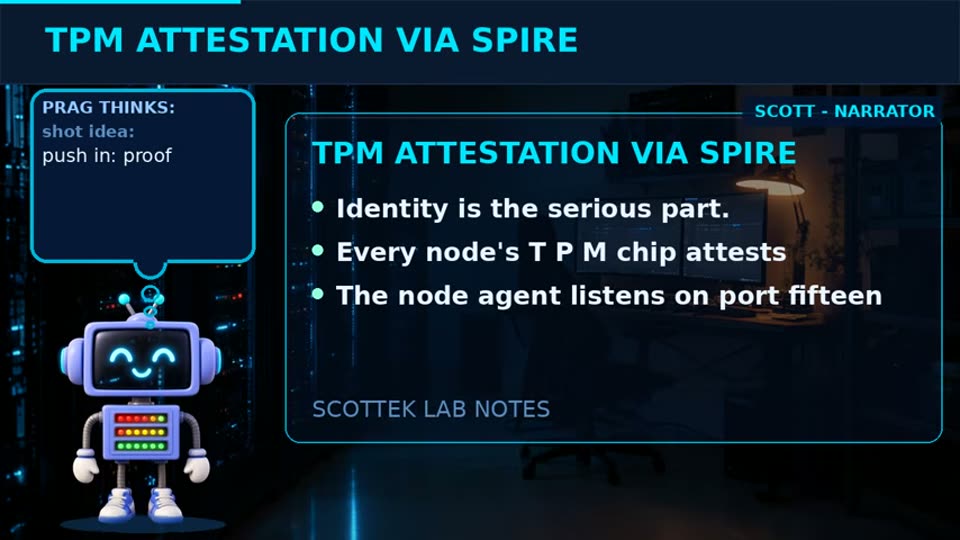
- In the video: the flow starts with a throwaway seed cluster, then fleets of workload clusters on demand, each with its own control plane. Node identity comes from TPM attestation via SPIRE, with the pinned versions shown on screen.
- Added from the sources: the architecture docs describe a seed cluster that stands up a management cluster, which then provisions many isolated workload clusters, each with its own control plane plus
etcd— the per-cluster control-plane direction the video contrasts with namespace multitenancy likevCluster. - Added from the sources: the management plane pins SPIRE
1.15.3with a TPM plugin, andnvke-agentlistens on port15005. Pinned platform versions include Kubernetes1.36.3, OVN-Kubernetes2.4.2, and Ubuntu24.04node images. The quickstart example creates1.36.4while supported-platforms pins1.36.3, a small wrinkle noted in the research notes. - Added from the sources: the GPU Operator installs drivers, the Container Toolkit, and the device plugin after provisioning, while the infrastructure layer itself provisions bare servers without GPU or fabric software.
The preview warnings come first
- In the video: the preview page warns in plain language, including plain-HTTP admin, and practitioners in the thread push back on heaviness and fit.
- Added from the sources: the preview-status docs state NVKE is not for production. After install, the API serves plain HTTP on port
30080of every management node with authentication off, and the operator adds their own TLS plus JWT or OIDC. There is no authorization model, so any admitted caller has full access. - Added from the sources: the management cluster cannot upgrade, scale, or replace itself, and there is no management-plane upgrade or backup and restore procedure yet.
- In the video: the practitioner pushback is skeptical and practical, with vendor lock-in and heaviness concerns and questions about who NVKE is really for, answered toward NVIDIA Cloud Partner and full DSX-stack shops. That sentiment reading comes from the Hacker News thread posted 2026-11-06, and exact scores and comment counts are deliberately not quoted here because they drift.
The no-GPU quickstart, walked through on paper
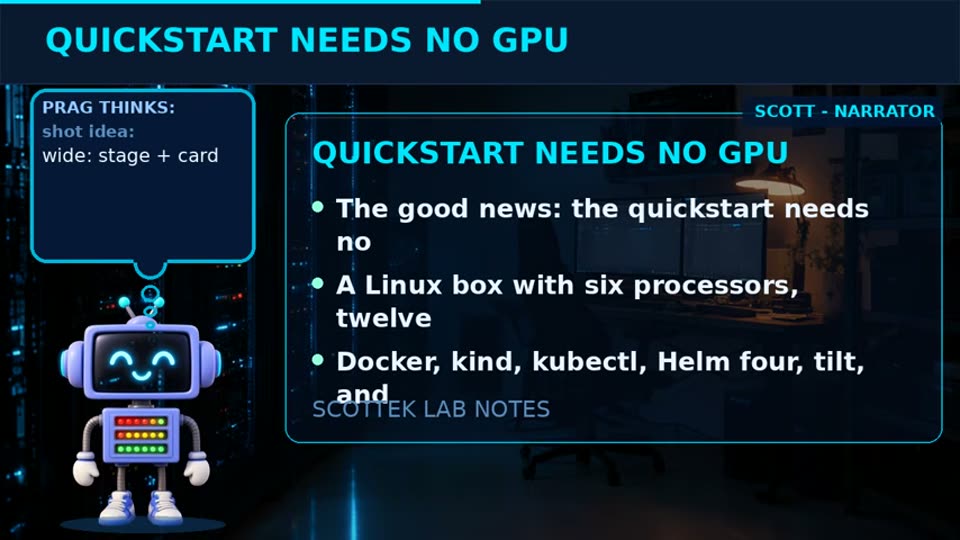
- In the video: the quickstart needs no GPU and no NVIDIA account, and the docs flow runs from clone to a mock cluster, with provisioning async so you verify it yourself.
- Added from the sources: the quickstart-local docs target Linux on
amd64orarm64with 6 or more CPUs, 12 GiB of free RAM, 100 GiB of free disk, and Docker Engine with BuildKit. - Added from the sources: the documented tool chain is
git,make, Go,gcc,kind,kubectl, Helm,tilt,jq, andcurl, and from the repo root the documented sequence isgit clone,make -C controller host-up,make -C cli build, pointingnvkectlat the local site, then creating the mock cluster, polling until the cluster reads Provisioned, pulling the kubeconfig, and runningkubectl get nodes. - In the video: those quickstart nodes are Docker-container simulates, which proves the factory flow, not GPU scheduling, and real GPU workloads need bare metal with the GPU Operator path described above.
- Untested here end to end: the bench had no Docker host, so every command above is docs-voiced from the official quickstart, captured on camera from the docs page, and never claimed as executed. Confirm the current page before running anything, since preview docs move fast.
Should your homelab care
- In the video: the shelf already has options, meaning
kubeadm, Cluster API plus Kamaji, Talos Linux, and managed Kubernetes, so NVKE joins a crowded field rather than emptying it. - Added from the sources: the NVIDIA technical blog frames the announcement around GPU infrastructure providers, naming Firmus and SK Telecom as cloud partners, which supports the video's read that this is fleet-scale tooling first and homelab curiosity second.
- In the video: the decision rule is fleet scale or stay K3s. If you are stamping out isolated per-team or per-customer clusters on your own GPU iron, NVKE's per-cluster control planes are the serious direction. If you run one lab cluster, K3s or your current distro remains the lighter answer, and nothing in preview status argues for migrating today.
- The video's verdict: a serious factory wearing an honest preview label. Read the preview warnings as load-bearing, walk the mock quickstart untested before forming opinions, and keep this guide next to the video until the first stable backs its claims.
Sources and what was checked
- In the video: every section above is labeled so video narration and added research stay separable, and version numbers appear only where a primary source backs them.
- Added from the sources: primaries re-verified with
curlon 2026-11-18, each resolving200: the NVKE repo, the NVKE docs, the NVIDIA technical blog post, and the Hacker News thread. LicenseApache-2.0andv0.23.1published2026-11-03were additionally confirmed via the GitHub API at draft time. - Added from the sources: the Prag research folder grounded this draft, including
LEDGER.mdfor the bench-honesty rewrite andresearch/SOURCES.mdfor architecture, preview limits, quickstart requirements, and sentiment notes.