Unraid 7.3.4 Fixes Critical PHP RCE: Update Now

This companion guide starts from the video Unraid 7.3.4 Fixes Critical PHP RCE: Update Now, which walks through Unraid's patch-now release for the PHP2Shell vulnerabilities. Every consequential claim below is grounded in a primary source linked inline, and second-hand reports are labeled as reported rather than verified.
Why a PHP bug threatens your NAS
Your NAS runs a website. The Unraid web GUI you open in your browser runs on PHP, and on October 21st PHP disclosed two unauthenticated remote code execution holes, both scoring 9.2 out of 10. The pair is called PHP2Shell, tracked as CVE-2026-109618 and CVE-2026-109619 in the Bitdefender technical advisory. The first triggers an out-of-memory condition at the end of an abnormal request that corrupts memory toward code execution, and the second is a use-after-free where request-owned internal state survives after its memory is freed. PHP shipped emergency fixes the same day: 8.5.12, 8.4.27, 8.3.36, and 8.2.35. Anything older than those builds is on the wrong side of this one.
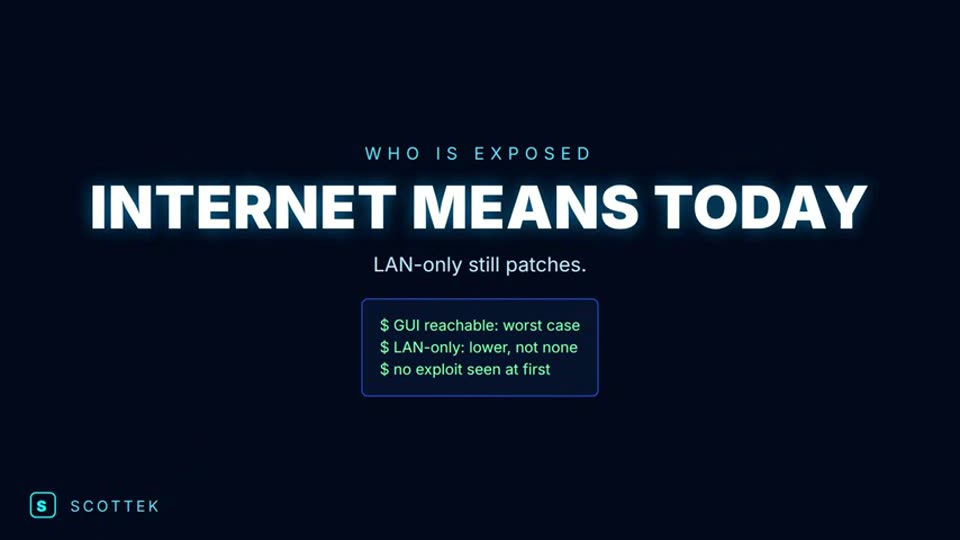
Risk scales with exposure. Researchers put Apache servers running mod_php at the highest risk, with PHP-FPM, php-cgi, FrankenPHP, and LiteSpeed exposed to varying degrees. A GUI reachable from the internet is the worst case, while a strictly local-network box is lower risk but not zero risk, especially with plugins and containers in the mix. The video relays an early CrowdStrike observation that it had seen no successful exploitation in the wild or in its honeypots and no fully weaponized public exploit at that time. That observation is dated to the first reports, not a current guarantee, so treat it as reassurance rather than a reason to wait.
What Unraid 7.3.4 ships
Unraid OS 7.3.4 is the stable release from October 22nd, and the release blog names both CVEs outright with PHP moving from 8.4.26 to 8.4.27, exactly the fixed build. Note the sourcing carefully: the full release notes page phrases the PHP fix generically, so this guide cites the release blog for the CVE names. The Linux kernel goes to 6.18.58, and where a secondary write-up prints a different kernel build, this guide follows the official blog figure. The release also carries WebGUI security fixes plus Docker icon handling and File Manager fixes. Underneath it is a broad sweep of 44 package updates versus 7.3.3, including curl 8.23.0 covering 21 CVEs, OpenSSL 3.5.9 covering 13 CVEs, nginx 1.30.4 to 1.30.6, and CVE fixes across the X11 stack, libpng, openssh, and libarchive. Unraid's own words are that all users are encouraged to update.
Which branch to take
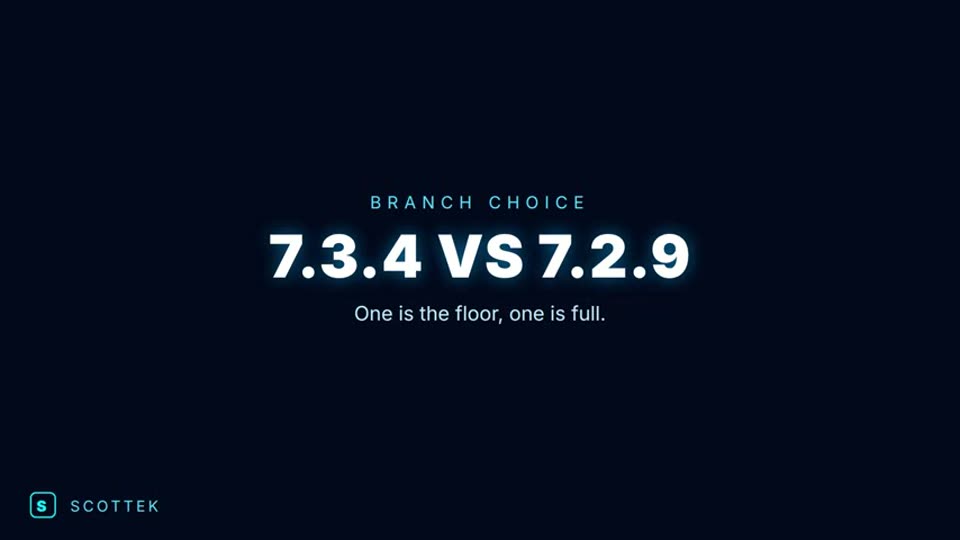
Unraid shipped two releases, not one. Unraid OS 7.2.9 followed on October 23rd as a targeted maintenance release for the older 7.2 branch with just four packages: PHP from 8.4.23 to 8.4.27, which closes PHP2Shell, plus a CA certificate update for the eMudhra compromise and the Unraid API from 4.36.1 to 4.37.7 with a newer bundled Node runtime. The kernel is unchanged from 7.2.8. Unraid is blunt about the gap, warning that updating to 7.2.9 alone should not be interpreted as resolving every potential open security issue, with upstream advisories still listing around 115 potential CVEs against its package set. Their recommendation is explicit: take 7.3.4 for the newer kernel and the broader security sweep, and take 7.2.9 only as the floor if you have a reason to stay on the 7.2 branch. A secondary analysis adds useful color that PHP is the WebGUI itself plus several plugins, and points at the in-GUI update path covered below.
Safe update order
The update itself is the easy part, and the order keeps you safe. Back up the USB flash drive from the web GUI plus a copy of the configuration first, and confirm the array is in a healthy state before you start, because the flash drive is the whole Unraid identity. Then work this list in order.
- Back up the flash drive and configuration, and note the array state before touching anything
- Check pending plugin and Docker image updates so nothing stale survives the reboot
- Run the OS update from Tools Update OS in the GUI following the official updating guide, then let the box reboot
- Verify afterward that the OS version reads
7.3.4or7.2.9with PHP on the fixed build, and fall back to the backup if a plugin misbehaves
This walkthrough is untested by me, since I did not run the update on my own hardware, so treat it as vendor-documented rather than independently tested. Budget roughly twenty minutes plus the reboot.
Finish the job in your containers
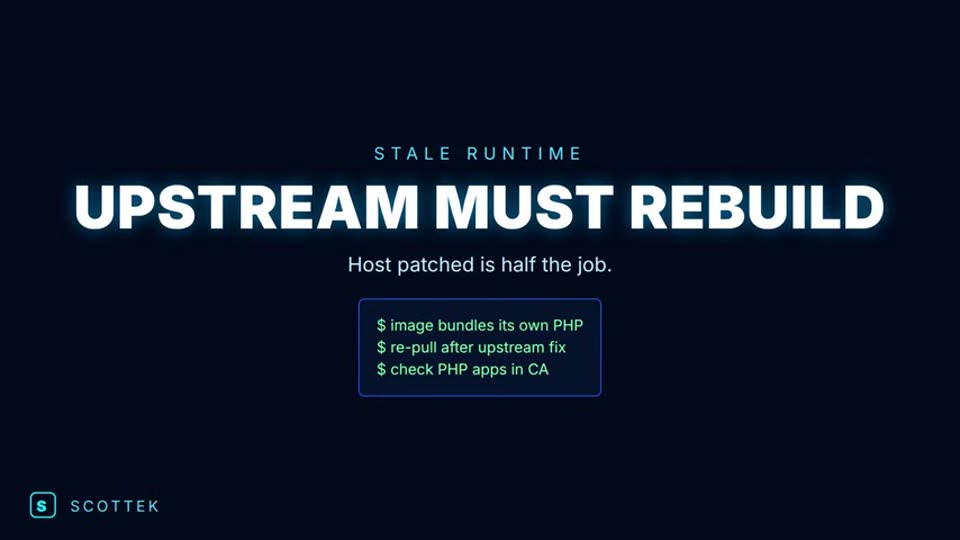
Here is the trap that will bite people. Updating Unraid patches the PHP in the host OS and the web GUI, but it does not patch the PHP inside Docker containers. Every image bundles its own runtime, and a container keeps serving its old PHP until its image is rebuilt upstream and re-pulled. One forum audit found a popular ownCloud image still carrying a pre-fix PHP 7.4.33 build days after the disclosure, fixed only when the maintainer's rebuilt image landed. That anecdote is reported, not re-verified here, but the mechanism behind it is certain regardless, and early upgrade reports on the forums and r/unRAID are cited only in general terms for the same reason. After the OS update, re-pull images and check anything PHP-based in Community Apps for a refreshed build. A patched host plus stale containers is half a job.
Verdict and five boring habits
The verdict is simple. On the 7.3 line, take 7.3.4 now for the named CVEs, the fixed PHP build, and a kernel plus curl plus OpenSSL sweep that is worthwhile even if PHP2Shell never touches you. Pinned to 7.2, take 7.2.9 as the floor and plan the jump to 7.3.4 for full coverage, then finish the job in the containers. Five habits shrink the next scare like this one.
- Keep the Unraid web GUI off the internet and reach it over a VPN or tunnel instead of a port forward
- Keep plugins, apps, and container images on a regular update rhythm, not just the OS
- Keep the flash backup current and confirm it reads, since a dead flash drive is a dead array config
- Give the box clean power and clean shutdowns so an update never gets interrupted mid-write
- Follow Unraid release announcements so the next security point release finds you in days, not months