GL.iNet Cloud Flaw Used to Plant Malware on Routers and KVMs: Check Your Device, Then Update
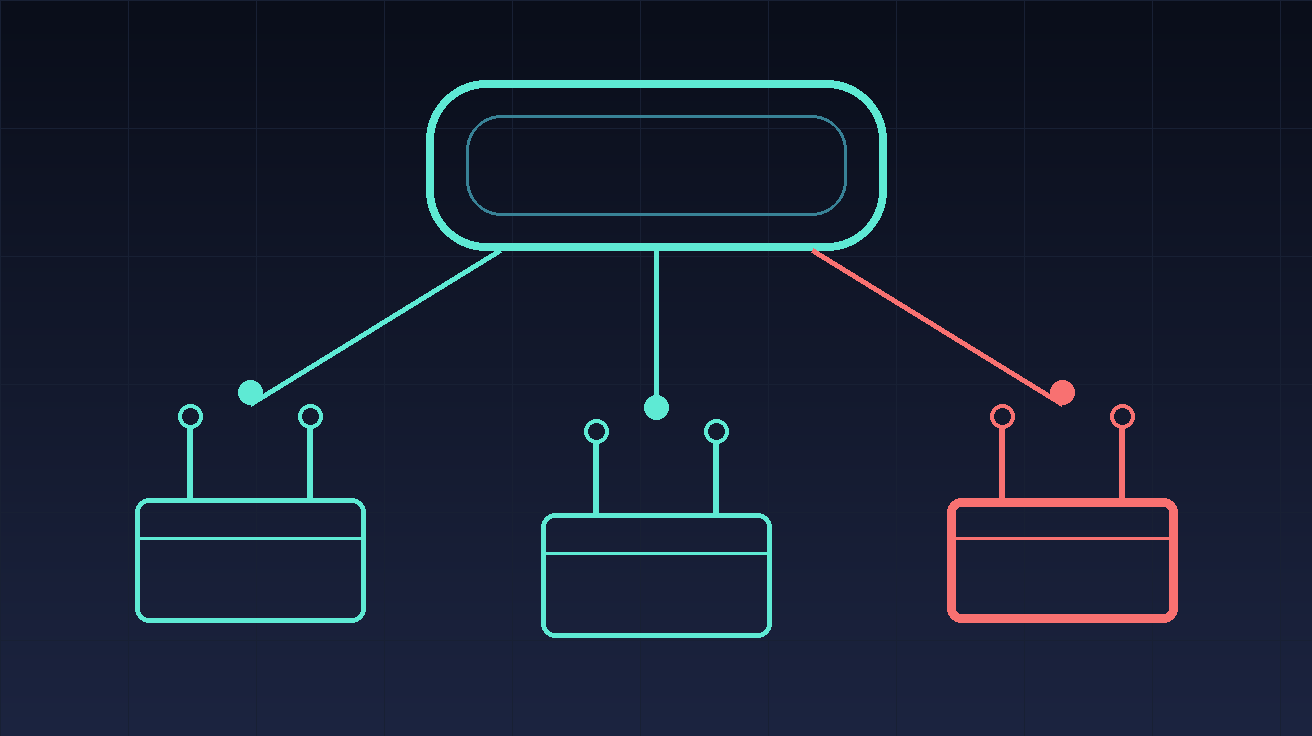
GL.iNet confirmed on November 20 that attackers exploited a vulnerability in its cloud remote-management services to access and install malicious software on some of its routers and KVM devices. The company says it fixed the cloud vulnerability and blocked the attack path — but adds plainly that those server-side measures do not remove malware from devices that were already infected. Independent reporting from BleepingComputer's Lawrence Abrams on November 22 confirms custom-built malware, backdoors, and root-level reverse shells on affected devices.
This one matters to homelabbers directly: GL.iNet's small travel routers are the standard way to carry a VPN uplink on the road, and its Comet KVMs sit between you and your servers with full view of the screen and keystrokes. If you own either and ever bound it to GoodCloud, read on and check your device today.
What happened
Per the vendor notice, issued November 20 and last updated November 21, an unauthorized party used the cloud-services flaw to reach devices and plant malware. GL.iNet's words: the attack path has been blocked and devices can no longer be newly infected through it, but already-infected devices need owner action. The notice names one indicator of compromise — a running process containing crond -i /tmp/.log — and says stable security firmware for both routers and KVM devices was scheduled for November 22, 2026, recommending it for every device even when the check finds nothing.
The timeline filled in fast. PrivacyAffairs' Miklos Zoltan, reporting November 21, documents fixed KVM beta firmware appearing that day — version 1.10.2 for six Comet models and 1.8.6 for the RMQ1 — plus per-model infection checks published by GL.iNet staff on the company forum. BleepingComputer's November 22 report adds that GL.iNet is notifying identified affected customers at the email address on their cloud accounts, and cites vendor upgrade guidance recommending KVM firmware 1.10.3 or later for most Comet models and 1.8.7 or later for the RMQ1.
What researchers found beyond the notice
The most detailed technical picture comes from RemoteToHome Consulting's open findings file, which grades every claim by evidence and which I treat here as researcher analysis, not vendor confirmation:
- Root reverse shells to one address. On a GL-AXT1800 running firmware 4.8.3 with GoodCloud on, the researchers verified a root shell (
/bin/sh -ijoined through a named pipe/tmp/ftonc 170.39.226.219) starting about 21:40 UTC on November 20. Two more AXT1800 routers showed the same shell, and a November 22 field check found it still running on 23 more managed routers. The hosting provider has since suspended that server, per the researchers' infrastructure notes. - A likely entry point — unconfirmed by the vendor. Reading the on-router GoodCloud client (
gl-sdk4-cloud), they found that an AstroWarp/SD-WAN message handler builds aniptablesrule from cloud-supplied values without validating them — a command-injection path that runs whether or not AstroWarp is enabled. The same code appears in firmware back to version 4.7.0 (December 2024) but not in 4.6 images. GL.iNet has not confirmed this was the exploited path, so treat it as the leading hypothesis, not the official cause. - The vendor's check misses shell-only infections. The researchers' shell-bearing router never showed the
crond -i /tmp/.logindicator. The shell itself leaves no file and vanishes on reboot — though the/tmp/fpipe and an empty/etc/mp_ip_mapping_infofile written November 20 or later can survive and betray that the handler ran. - The installer is purpose-built. BleepingComputer examined a copy of the
ni.shscript and found code tailored to GL.iNet models that downloads executables namedgl-helperandgb, persists across reboots via startup scripts and scheduled tasks, replacesnetstatto hide its own connections, and can add SSH keys. GL.iNet staff warn thatnetstatitself may be replaced on an infected box — so a clean-looking connection table proves nothing. - KVMs look worse than routers. One compromised GL-RM1 owner's logs show it pulling
ni.shand payloads from a second address on November 19, then talking to roughly 1,800 residential IPs daily plus repeated TRON blockchain API contacts. BleepingComputer notes the purpose is unclear with no confirmation of proxy or botnet use — but a KVM that types on your keyboard deserves the darker assumption until proven otherwise. - A second, older backdoor surfaced during the hunt. Forum users found a modified
/etc/init.d/urandom_seedstartup script plus a/bin/ulogdfile on routers, with file dates from September 2025 to May 2026; the researchers verified it installed and running on 49 routers they manage, all bound to GoodCloud before their install dates. How it got there is unknown, and the vendor notice does not mention it. Some recovered files carry December 2025 timestamps — possibly months-old infections unrelated to this week's attack, possibly not.
On the fix side, the researchers verified that GL-MT3000 firmware 4.11.1 adds real input validation to the suspect handler and ships a first-boot cleanup script — but one they describe as partial, since it restores the startup script without removing every backdoor file. They also flag one further cloud-client weakness as still unaddressed in 4.11.1, details withheld while it is reported to GL.iNet. New November 22-dated stable builds have appeared for several router models in their firmware listing check, with gaps remaining for others — so check the download center for your exact model rather than assuming coverage.
What to do if you own GL.iNet gear
- Run the vendor check now, before rebooting or upgrading — some traces exist only until restart. On a router, search running processes for
tmp/.log(SSHps | grep tmp, or LuCI status processes); on a KVM, run it in Toolbox Terminal per GL.iNet's notice.crond -i /tmp/.logmeans infected. - Run the wider checks too, since the vendor indicator misses cases: unexpected connections toward
170.39.226.219, a stray/tmp/fpipe, or an/etc/mp_ip_mapping_infofile you never created. Do not trustnetstatoutput on a suspect box. - If anything hits, treat the device as fully compromised. GL.iNet recommends a factory reset plus the security firmware; the researchers go further and advise treating every key and password on the box — VPN profiles, SSH keys, admin passwords — as read by someone else, revoking them server-side too. A reset wipes your settings either way.
- Install the security firmware regardless. KVM owners should take 1.10.3 or later (1.8.7 or later on the RMQ1) per the vendor guidance BleepingComputer cites; router owners should pull the newest stable build for their exact model. One researcher-tested caution for RM1 upgraders: the 1.10.2 update rebuilds the writable layer from a fixed list and leaves SSH switched off afterward.
- Consider switching GoodCloud off until fixed firmware is on. That is researcher advice, not vendor guidance — but the researchers verified the cloud client only starts when GoodCloud is enabled on the device, and one owner reports an upgrade with settings kept re-enabled the cloud client, so re-check the switch after every update. Keep another path into remote devices before you flip it.
- KVM owners: think about the connected computers. GL.iNet says it is still determining the scope, including whether machines attached to affected KVMs were impacted. Until that lands, quarantine an infected KVM and scan or re-image anything it could reach.
What remains uncertain
No CVE identifier has been published, no device count given, and nothing so far says whether data was taken. The exploited entry vector is vendor-unconfirmed, the older backdoor's install route is unknown, and at least one cloud-client weakness is reportedly still open. I will update this article as GL.iNet's investigation and the stable firmware rollout progress — the November 22 builds are the first milestone to watch.
Comments (0)
Log in to comment.