nginx2root: Five Unauthenticated nginx RCE Flaws Fixed in 1.30.7 and 1.31.9 — Patch Your Reverse Proxy Now
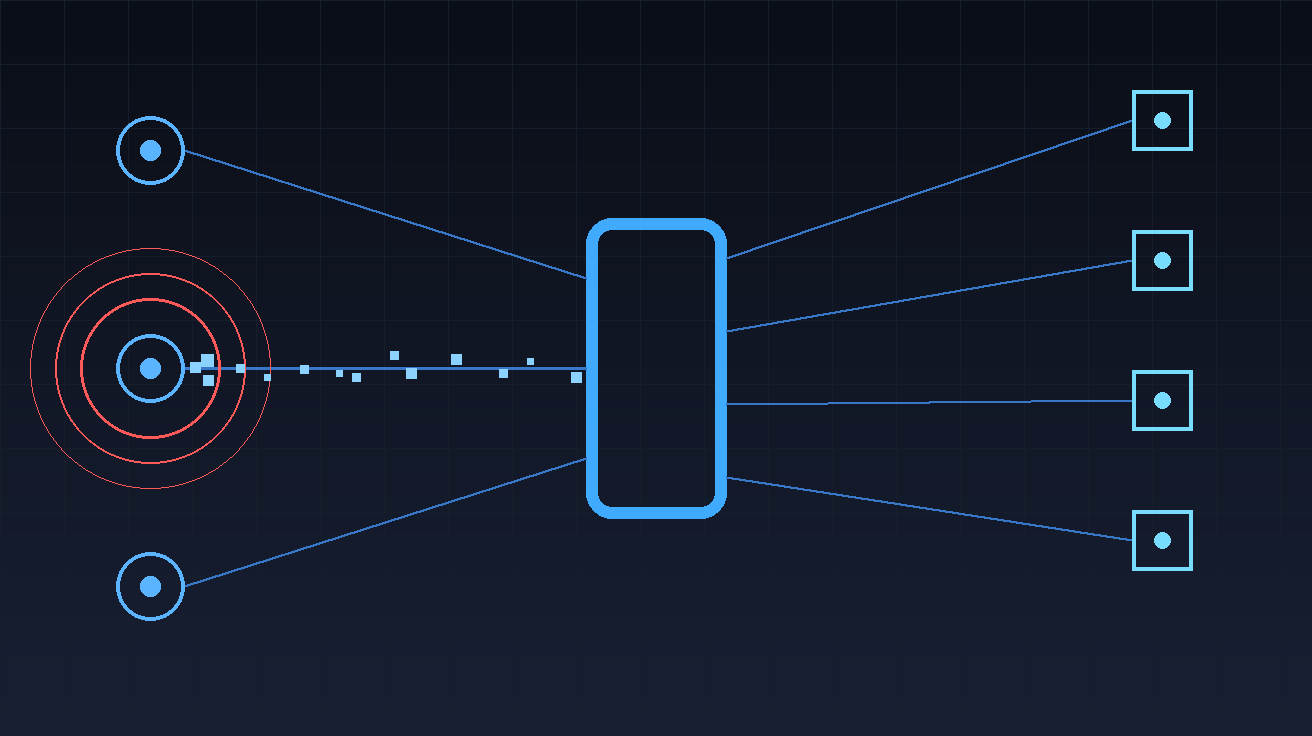
The nginx project released versions 1.30.7 (stable) and 1.31.9 (mainline) on November 18, fixing ten security vulnerabilities — including five memory-safety flaws that allow unauthenticated remote code execution. The five, disclosed together under the name nginx2root by offensive-security firm Xint, carry a 9.2-out-of-10 Critical score on the CVSS 4.0 scale from F5, the company behind nginx. Independent reporting by The Hacker News and Linuxiac on November 18 confirms the release date, the affected versions, and the severity ratings.
This is a different story from last week's Apache mod_http2 RCE — different server, different flaw, same lesson. If your homelab exposes nginx to any network — a reverse proxy in front of Jellyfin or Immich, Nginx Proxy Manager, an ingress controller on your k3s box — this one is aimed squarely at you.
What was disclosed
Each of the five nginx2root flaws is an independent attack path, needing no login, but each bites only in a particular configuration, per the official nginx security advisories:
- CVE-2026-123007 — memory corruption in HTTP/2 flow control, the worst of the five. Any server with HTTP/2 enabled is exposed, and it affects every release from 1.9.5 (2015) through 1.31.8, so the bug sat in the codebase for over a decade.
- CVE-2026-123633 — use-after-free in HTTP/2 when requests are proxied to an upstream backend, versions 1.19.7 through 1.31.8. This is the classic homelab reverse-proxy shape.
- CVE-2026-121810 — use-after-free in HTTP/3 when proxying upstream, versions 1.25.0 through 1.31.8.
- CVE-2026-123634 — use-after-free in the resolver, versions 0.6.18 through 1.31.8, reachable when a proxied destination is built from request variables.
- CVE-2026-113425 — use-after-free in the mail proxy module, versions 0.5.33 through 1.31.8.
Two separate research teams demonstrated working code execution. Rapid7 disclosed CVE-2026-123007 jointly with F5 on November 18 — researcher Stephen Fewer found the integer-underflow bug — with a proof-of-concept achieving unauthenticated RCE against nginx 1.31.8 in Docker. Xint's team reports going further in its own tests: commands run with the nginx worker's privileges, and chaining the nginx flaw with a separate Linux kernel SCTP-subsystem bug escalated to root on the host — even escaping a Docker container running nginx in demos run over a public IP.
Two honest caveats come from the researchers themselves. Rapid7 notes its exploit needs roughly 128 GB of HTTP/2 traffic inside nginx's default one-hour connection lifetime — practically, a network faster than about 300 Mbit/s — plus a specific x86-64 memcpy implementation, and HTTP/2 connections relayed through another proxy likely will not carry the attack. And per The Hacker News' summary, neither the vendor nor the Wiz and Rapid7 researchers had reported any in-the-wild exploitation as of November 18, and the flaws were not in CISA's Known Exploited Vulnerabilities catalog. Treat this as patch-urgent, not patch-panicked.
What to do on your homelab
Update nginx to 1.30.7 (stable branch) or 1.31.9 (mainline), then restart it — a reload is not enough, because a reload keeps old worker processes on existing connections. Concretely:
- Docker users are in the best shape. The official nginx images on Docker Hub already carry the fixed tags, and the
mainline,stable, andlatesttags were refreshed the same day — re-pull the image and recreate the container, since recreating is what replaces the running binary. - Distro-package users may still be waiting. Cycode's November 18 status check found fixed builds in Alpine 3.24 and edge, but Debian (bookworm through sid), Ubuntu (16.04 through 26.10), and OpenResty had published no fixed builds when checked. If
apthas nothing for you yet, the stopgap below applies until your maintainer ships. - Nginx Proxy Manager and other nginx-based images need their maintainer's rebuild. Anything bundling nginx inherits the flaw until its image is rebuilt on a fixed base — watch your image's releases and re-pull when it lands.
- ingress-nginx users should plan a move. The retired ingress-nginx controller will not receive a fix, so disable HTTP/2 on it and migrate to a maintained ingress or an nginx 1.30.7/1.31.9 build.
The emergency stopgap is disabling HTTP/2 — http2 off; in each server block on nginx 1.25.1 and later, or removing http2 from the listen directive on older builds. That blocks CVE-2026-123007 and CVE-2026-123633, the two remotely reachable HTTP/2 paths, but none of the other three RCE flaws — and one of the five additional fixes, an infinite loop reading request bodies over TLS 1.3 (CVE-2026-118899), has no configuration workaround at all. Check exposure with nginx -v against the ranges above, and confirm HTTP/2 and HTTP/3 listener state in your own configs.
What remains uncertain
Three things to keep in perspective. First, distro-package timing: Debian and Ubuntu had no fixed builds as of November 18, so most bare-metal homelab boxes are still exposed unless they run nginx.org's own builds or fixed containers. Second, the kernel half of Xint's container-escape chain — a separate SCTP-subsystem privilege-escalation bug — is a host-kernel problem, not an nginx problem; the nginx update closes the remote door, which is the part you control today. Third, one week after the Apache HTTP/2 RCE, this is the second critical HTTP/2-adjacent server flaw in seven days — if you have been meaning to inventory which of your services terminate HTTP/2 at the edge, this is the week to do it.
Comments (0)
Log in to comment.