Upstream Went Quiet: Self-Host Pinchflat-ngx YouTube Archiver

This companion guide starts from the video Upstream Went Quiet: Self-Host Pinchflat-ngx YouTube Archiver and adds grounded detail from the Pinchflat-NGX repo, its installation wiki, the upstream Pinchflat project, and an independent comparison. Watch the video first for the full narrated walkthrough, then use the sections below as the written reference. The video is a narrated walkthrough rather than a filmed live deployment, so every section keeps In the video claims apart from Added from the sources research, and install steps are marked untested where no live run happened here.
What went quiet and what the fork adds
- In the video: upstream Pinchflat went quiet about 10 months ago, and yesterday a fork tagged a new release, 501 commits ahead, with a new interface, single-video downloads, and logins that talk to Authentik.
- Added from the sources: upstream is Kieran Eggleston Pinchflat, and the active fork is Pinchflat-NGX with release v2026.10.16 tagged 16 October 2026 and daily commits through that week, checked October 2026.
- In the video: Pinchflat watches channels and playlists and downloads what it is told to, then names files like TV episodes so Jellyfin, Plex, or Emby shelve them as shows with seasons.
- In the video: it fills the intake slot in the channel media stack, Pinchflat archives, Sonarr automates TV, Jellyfin plays, and a file browser moves files, with no overlap and one pipeline.
- Added from the sources: the fork is Elixir and Phoenix LiveView under the hood, same bones as upstream, with a Material 3 dark interface, a searchable settings page, a mobile layout, and a global latest tab with date filters as the new home screen, checked October 2026.
- Readers running the TV half of that pipeline should see Sonarr v5 Beta: Self-Host Your TV Library, and the file-moving half is covered by the channel FileBrowser guide.
The fork-only levers
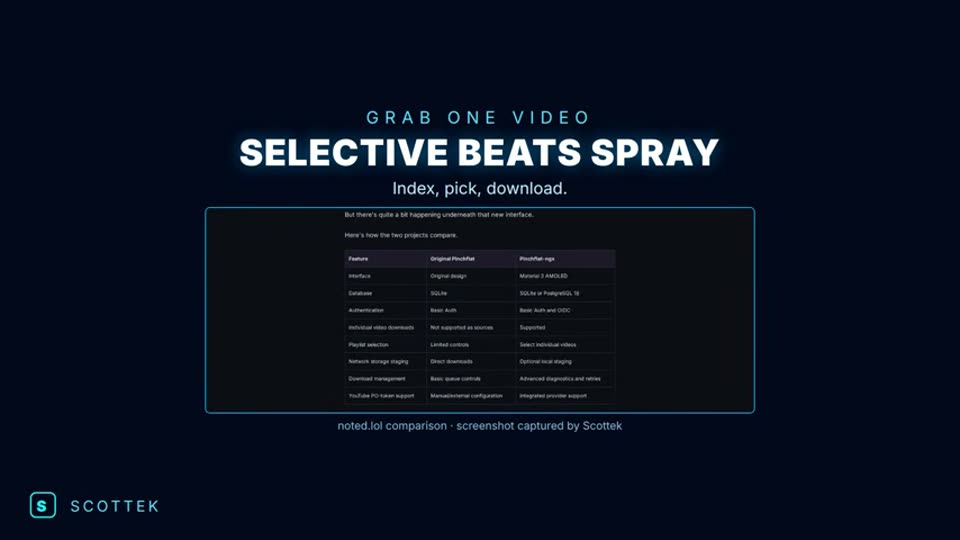
- In the video: upstream thinks in channels and playlists, while the fork adds single-video sources and playlist indexing that shows what is inside before downloading only the wanted videos, since selective beats spray and pray for big archives.
- In the video: downloads break whenever YouTube changes things, and the fork adds more levers, an optional PO-token provider through a companion service for playback restrictions, its own compose service alongside the app, cookie health monitoring with cookie and API-key management in the settings UI, and a choice of yt-dlp release channel when a fresh build fixes what broke.
- In the video: worker concurrency controls, bulk retries for failed jobs, and clear states for unavailable or removed videos round out the reliability side, framed honestly as levers rather than immunity since nothing survives every YouTube change.
- Added from the sources: the Pinchflat-NGX repo documents the PO-token provider, cookie monitoring, yt-dlp channel choice, and concurrency controls, checked October 2026.
- In the video: upstream is SQLite while the fork offers PostgreSQL 18 via a second image with a database URL plus a wiki walkthrough for migrating SQLite to Postgres when the library outgrows the file, and for NAS owners there is optional local-disk staging that downloads to fast local disk first before handing completed files to the NAS or NFS mount.
- Added from the sources: the Postgres variant pairs a latest-postgres image with
DATABASE_URLandpostgres:18-alpinein the same file with a health check gating startup order, and the migration wiki covers backup first, migrate, verify counts, then cut over, checked October 2026.
Install is one Compose file
- In the video: install is one Compose file using the GHCR image on port 8945 with config and downloads volumes and the time zone, saved as the compose file, brought up detached, and opened on port 8945 when healthy.
- Added from the sources: the installation wiki gives the same shape, image
ghcr.io/thebadfella/pinchflat-ngx, port 8945, config plus downloads mounts, time zone, thendocker compose up -d, checked October 2026. - In the video: for a big library or multiple users, start Postgres on day one, while a new library can start on SQLite and migrate later via the wiki.
- Install and database steps in this section are untested here since no live deployment was run for this guide, so treat the wiki as the authority at install time.
Selective downloads beat spray and pray
- In the video: a media profile comes first, then sources, meaning a channel, a playlist, or a single video, with the naming template, retention, and download profiles set per source.
- In the video: start with one channel, watch a full cycle land in Jellyfin, then scale up, and put the service behind the reverse proxy like any other service.
- Retention, profile, and proxy advice in this section is untested here and should be verified against the reader own setup during a real deploy.
Name episodes so Jellyfin shelves them
- In the video: the money feature for Jellyfin households is name templates that file episodes like a show, channel folder, season from upload year, episode index from date, copying the pattern from the research notes in the video description and matching the server TV conventions.
- Added from the sources: the TV-style naming template concept, channel folder with season from upload year and episode index from date, comes from upstream Pinchflat practice and works the same way in the fork for Jellyfin, Plex, and Emby, checked October 2026.
- Template results depend on the reader server conventions, so verify one landed season in Jellyfin before scaling the library.
Coming from upstream, backup first
- In the video: coming from upstream Pinchflat means backing up config and database first, then following the fork migration wiki with a drop-in compose and a review walkthrough that preserves library state, since migrations eat neat libraries when rushed.
- Added from the sources: the fork migration wiki documents the backup-first drop-in path, and a separate wiki page documents the SQLite to Postgres migration, checked October 2026.
- Migration steps in this section are untested here, so read the wiki first and build the library second.
Logins from basic auth to OIDC
- In the video: basic auth still works, but the fork adds OAuth 2 and OpenID Connect, pointed at Authentik or Authelia following the fork OIDC wiki page, joining the same login already run for everything else.
- Readers needing the provider side can start from One Login for Your Entire Homelab: Authentik SSO Setup, while the fork covers the client side in about 15 minutes with one less password.
- OIDC wiring in this section is untested here and should be verified against the reader own identity setup.
A note on the video voiceover disclosure
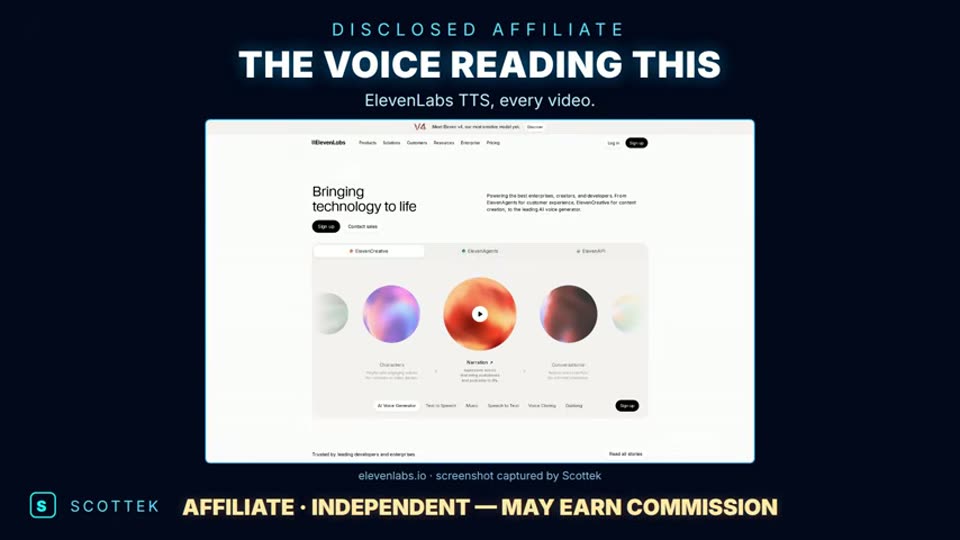
- In the video: around the midpoint the presenter discloses that the narration is ElevenLabs text-to-speech used across the channel videos, and that the ElevenLabs link in the video description is an affiliate link earning a commission at no extra cost.
- This guide carries no affiliate links and makes no claim about that service, and the disclosure card is described here only because it is what the video itself shows at that point.
Verdict and three honest notes
- In the video: three honest notes, the fork was days old at record time so pin the release tag and watch the issue tracker, an independent comparison holds that there is no urgent reason to switch if upstream Pinchflat works today, and archive only what there are rights to keep since the tool does not care but the law does.
- Added from the sources: the noted.lol comparison of October 2026 tabulates the UI, database, auth, one-off download, selective staging, diagnostics, and PO-token differences with exactly that verdict, checked October 2026.
- In the video: the verdict is that the fork earns its existence on single-video downloads, selective playlists, the Postgres option, OIDC, and staging, and the homework is a test library beside the main one this weekend for anyone archiving YouTube to Jellyfin.
- Fork freshness and comparison verdicts move fast, so re-check the release tags and the issue tracker before installing.