LFM3 on Linux and Windows: 1GB Local AI Agents

This guide is the written companion to the video LFM3 on Linux and Windows: 1GB Local AI Agents, and it is an explicit sequel to the earlier Install LFM3 1.7B on Ubuntu guide, which covered the launch-day model itself while this one covers the Linux and Windows expansion. Claims shown in the recording are labeled In the video, and everything confirmed against the official release pages is labeled Added from the sources. Auto-captions were blocked with HTTP 429 when this draft was prepared, so the video narration and the video description serve as the transcript-equivalent here. Nothing below was executed on a local box for this draft, so every command is marked untested until run.
What changed in v0.40.13
- In the video: Ollama v0.40.13, published 2026-10-28, is a single-item release that lets the LFM3 models, including text-to-speech in
lfm3-audioandlfm3-omni, run on Linux and Windows as well as Apple silicon, per the v0.40.13 release notes. - Added from the sources: the prior release v0.40.12, from 2026-10-27, launched the LFM3 family on Ollama stamped Apple-only, so Linux pulls on day one failed demanding the MLX runtime.
- Added from the sources: that day-one Linux failure is the real issue 19369, filed against Ubuntu 26.04.1 on 0.40.12, and it is now Closed alongside the related unknown-architecture and audio reports.
The four tags, one command each
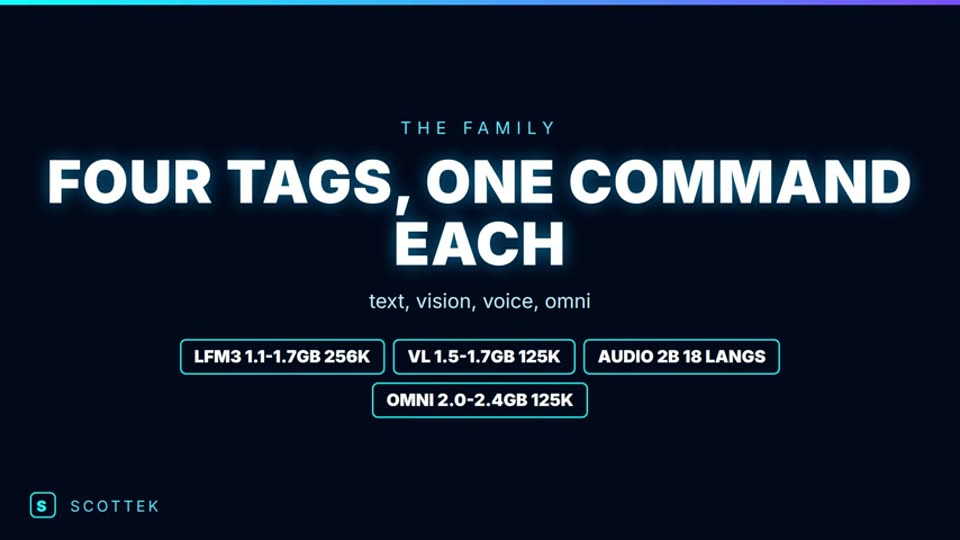
- In the video: the family is four Ollama tags, each near 1.1 to 2.4 GB, pulled with
ollama run lfm3,ollama run lfm3-vl,ollama run lfm3-audio, orollama run lfm3-omni, all untested here. - Added from the sources: per the lfm3 library page,
lfm3is the 1.7B text model with a 256K context window plus tools and thinking tags,lfm3-vladds image input with a 125K window,lfm3-audiois the 2B voice model with text and audio in, text and 24kHz speech out, a 32K window, and 19 speech locales, andlfm3-omnitakes text, images, video, and audio in and answers in text or speech with a 125K window and no reasoning mode. - Added from the sources: the family context from the Liquid launch post and the Hugging Face launch writeup is six models grown from the LFM3-1.7B base trained on 22T tokens, with 1.73B parameters in a tri-hybrid layout, and agent harnesses can point at these tags once pulled, untested here.
Why Linux needs a fresh build
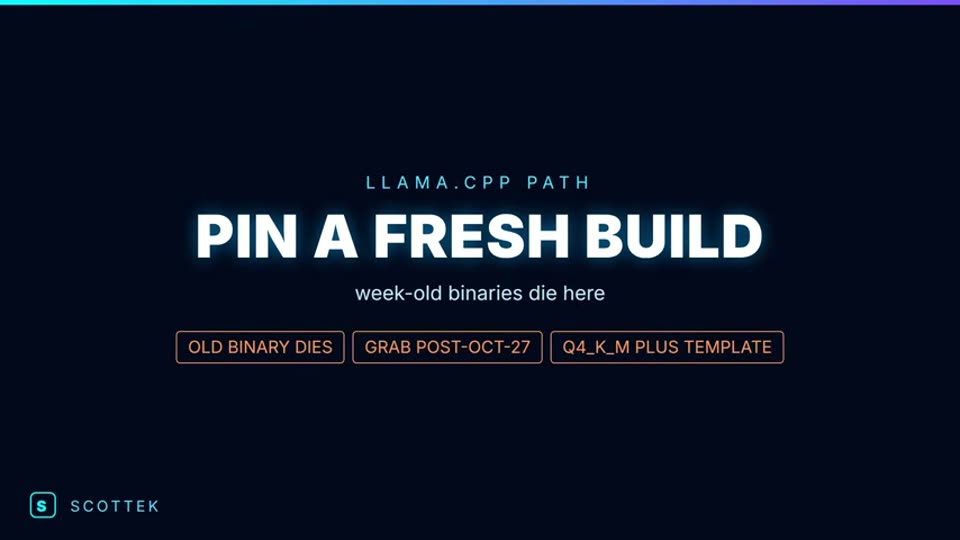
- Added from the sources: the Linux and Windows path needs GGUF support for the LFM3 architecture inside llama.cpp, which landed in llama.cpp master on 2026-10-27, after that week's last prebuilt binary, so older binaries die with an unknown-model-architecture error on
lfm3. - In the video: the stated rule is to pin a post-Oct-27 build, and current builds such as b12020 from Oct 31 include the LFM3-capable llama.cpp, untested here.
- Added from the sources: the GGUF model page carries the LFM3-1.7B quant files the llama.cpp path consumes, checked live when this draft was prepared.
Speed, labeled honestly
- In the video: the vendor chart figure, labeled VENDOR on camera, is 43.6 tok/s decode on an iPhone 17 Pro, which is Liquid's own phone-chip number via their published chart, not a desktop result.
- In the video: the independent figure is about 49 tok/s generation on Ubuntu x64 under build b12032 with the Q4_K_M quant on 8 threads, which is a third-party desktop-CPU number rather than a reproduced test here.
- Added from the sources: floor cases stay modest, with about 3 tok/s on a Pi 4 and about 0.72 tok/s with 4.10 prefill on a loaded 4vCPU VPS already holding 4.7 GB of other services, so a small idle box is the realistic home for this model.
- No Ollama benchmark was run on this draft's box, and the video's demo verifies through genuine public checks rather than a local bench run, disclosed as such.
License and honest limits
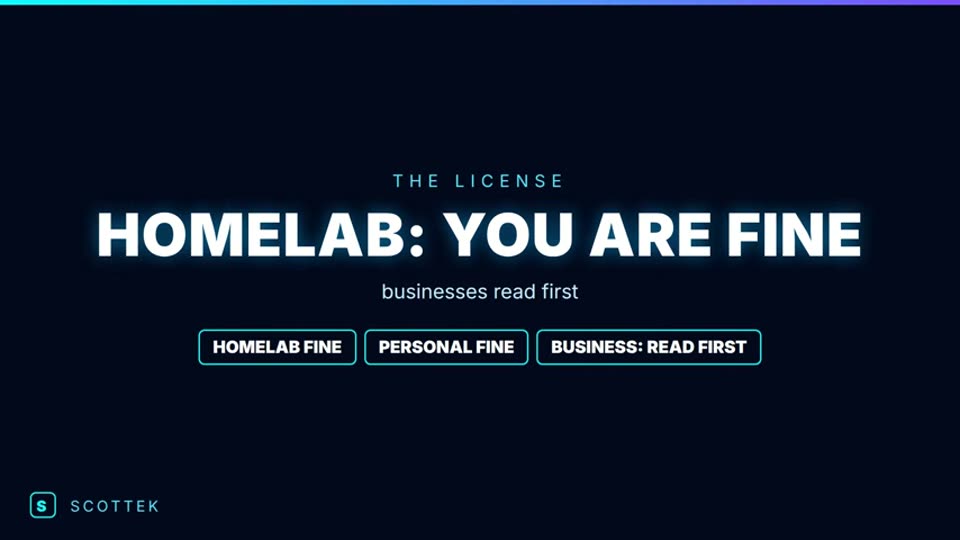
- Added from the sources: the license is the LFM Open License v1.0, Apache-2.0-based, with free commercial use under $10M annual revenue and a commercial license at or above that line, per the launch package, so homelab and personal use are fine while businesses should read the text first.
- In the video: the model is open-weight but NOT OSI open-source, and Liquid's own words say the 1.7B model is not for agentic coding or complex multi-step reasoning, so keep tasks short and verify anything load-bearing against stronger sources.
- This draft claims nothing beyond the video and the linked official pages, carries no affiliate links, and leaves every command marked untested until someone runs it on real hardware.