FreeRDP 3.33: RDP in Your Browser + 13 CVE Fixes
This guide is the written companion to the video FreeRDP 3.33: RDP in Your Browser + 13 CVE Fixes (384s, uploaded 2026-11-07), and it treats the video as the starting point. Claims shown in the recording are labeled In the video, and everything confirmed against the project release and independent coverage is labeled Added from the sources. Anything not independently run here is marked untested. Caption fetch for this video returned HTTP 429, so the wording below follows the published narration script as the transcript-equivalent. A Prag research package with ledger, notes, and the full narration grounds this guide, and the voiceover is synthetic narration.
In the video: your remote desktop compiled to WebAssembly and running in a browser tab — no app to install, hardware-speed video — with one honest catch, plus thirteen security fixes you want anyway. The presenter built 3.33.0 from source on a sandbox, proved the version, and ran a live RDP loopback against a shadow server, all on camera. Added from the sources: the 3.33.0 release post by Armin Novak dated 2026-11-02 and the 3.33.0 release tag confirm the release is real and current, with independent day-one coverage from heise and Linuxiac.
RDP in a browser tab, and the honest catch
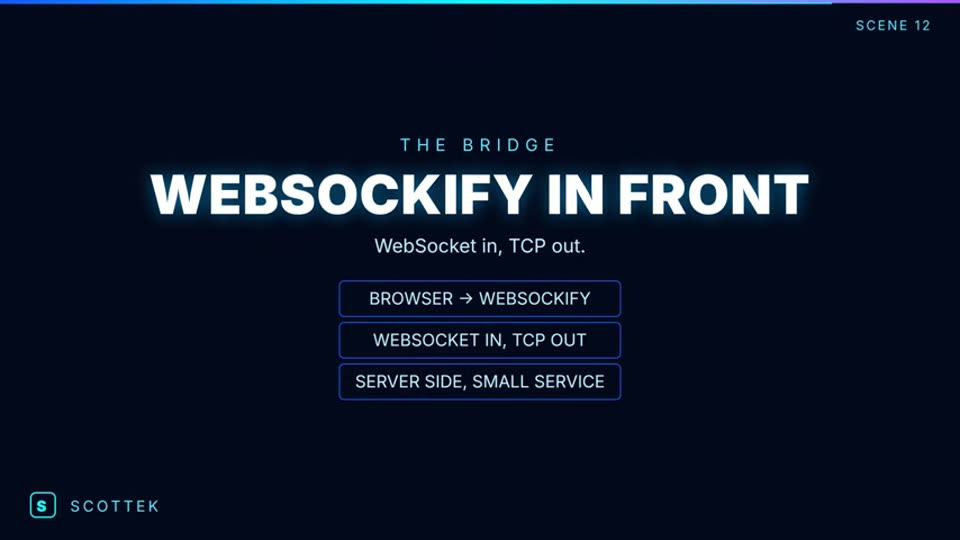
In the video: FreeRDP is the open-source implementation of Microsoft's Remote Desktop Protocol — the engine behind most RDP on Linux, from the Remmina button to the xfreerdp command line — and 3.33 is a feature release, not a quiet patch. The browser client compiles FreeRDP with Emscripten so the client itself runs in the page: WebCodecs decode for H.264 and AV1, Web Audio for playback and microphone, browser clipboard access, SIMD acceleration, and multi-monitor canvas split. Added from the sources: the release post and both press reports confirm this feature set, and the API docs carry the WebCodecs codec references. The honest catch stands: a browser cannot open a raw RDP socket, so a small WebSocket-to-TCP bridge such as websockify runs on the server side, with TLS staying end to end between browser and RDP server per the browser-client discussion. The working demo page is a third-party community project (community demo), never official — try it against a throwaway box only.
- If you self-host Apache Guacamole, the difference in one line: Guacamole renders on the server and streams pictures, while FreeRDP-WASM runs the actual client in your browser — server-side versus client-side, so test both before committing
- Compiling the web client yourself needs the Emscripten toolchain, which the bench did not attempt — untested
- Setting up a bridge service from this guide is untested; follow the project discussion thread first
Daily fixes: input pipe plus shadow server
In the video: second headline is experimental client-side UDP multitransport for direct connections that previously needed a gateway — and if it misbehaves, opt straight out with /multitransport:tcp-only. The rest is polish homelabbers feel daily: SDL client RemoteApp positioning, resize, and multi-monitor fixes; an X11 RAIL repaint deadlock fix; Unicode keyboard input through a named pipe on every client; the experimental Windows shadow server back for sharing a desktop; macOS Finder file copy without FUSE plus native H.264 decode through VideoToolbox; and first message translations. Added from the sources: the release post confirms the feature batch, the Linuxiac report confirms the experimental-UDP framing, and the bench confirmed /multitransport:tcp-only and /gfx:AV1 present in the 3.33 client help. Any UDP speed improvement is untested — treat the flag as available, not proven faster.
- Use the UDP mode for direct links where it may help responsiveness, and fall back with
/multitransport:tcp-onlywhen it misbehaves - The
mkfifoUnicode pipe and the shadow server are the two to learn first — one fixes input, the other shares a desktop - All flag behavior above is video- and research-attributed and is untested on the reader's machine
Check your version, then build or wait
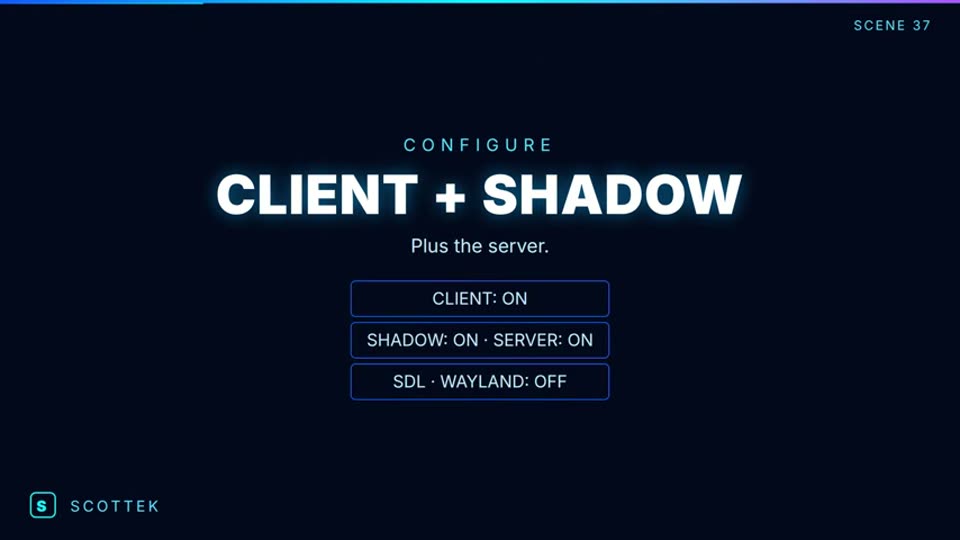
In the video: this release lists thirteen linked security advisories, and the advisory pages themselves are not publicly readable — so only the count is stated, never severity ratings or CVE numbers. Check what you have installed: apt-cache policy freerdp3-x11 tells the truth in one line. The presenter's Ubuntu box showed 3.32.1 from its repos and the Debian guest offered 3.15, both behind 3.33. Distro packages always trail a release this fresh, so two honest paths: wait for your distro's security update, or build 3.33.0 from source. Added from the sources: the Prag notes re-verified Ubuntu noble on 3.32.1 via apt-cache policy on 2026-11-07, and both press reports repeat the 13-fix count. The build recipe from the narration: fresh Debian or Ubuntu machine, toolchain plus cmake plus ninja and the dev libraries, clone the repo and check out the 3.33.0 tag, configure with client plus shadow plus server enabled and the SDL and Wayland clients off, then ninja — about a minute on the four-core sandbox guest. The bench then proved it: the fresh binary reported 3.33.0, its help listed the new multitransport flag, and the shadow server shared a test desktop on loopback while the fresh client connected with a real handshake and live pixels. The bench ran on a Proxmox Debian 13 guest per the Prag ledger — reader-side builds are untested here.
- Run
apt-cache policy freerdp3-x11to see what your distro offers — updates may have landed since 2026-11-07 - If your client talks to servers you do not control, treat the update as timely and do not linger on the old build
- Build tag
3.33.0from the release tag only, nothing newer or older, and confirm with./xfreerdp --version - The developers have already announced a follow-up patch release for leftover papercuts, so keep an eye out
Sources and next steps
- The companion video is the starting point for this guide and all In the video claims above
- The 3.33.0 release post owns the 2026-11-02 date, the WASM feature set, the 13 linked advisories, and the follow-up patch note
- The 3.33.0 release tag owns the source reference for the bench build
- The browser-client discussion owns the bridge design, the end-to-end TLS point, and the community-demo pointer
- The heise report and the Linuxiac report are the independent second sources
- For another Linux remote-access path on your network, see Install frp 0.71.1 on Ubuntu 24.04: Expose Your LAN