Let's Encrypt 64-Day Certs: Homelab Survival Guide

Companion guide and video starting point
This article is a companion to the video, not a replacement for it, and the video is the starting point for everything below.
In the video: the presenter explains the Let's Encrypt 64-day announcement, the two-thirds renewal rule, per-client checks for Caddy, Certbot, acme.sh, Traefik, and Nginx Proxy Manager, the authorization-reuse change, and a staging-first test plan with reload and alerting advice.
Added from the sources: dates, client versions, and policy details below were checked against the official 64-day announcement, the 45-day roadmap, and independent reporting from SecurityWeek. No live certificate issuance was tested for this guide, so treat the renewal flows as documented standard flows and run the staging test yourself as verification.
What changes and when
In the video: any certificate issued or renewed on or after February 10th gets 64 days instead of 90, the last 90-day certificate expires around May 11th, nothing is revoked early, and staging switches first on October 14th while endpoints, chains, and rate limits stay the same.
Added from the sources: the announcement confirms February 10, 2027 for production, staging on October 14, 2026, last 90-day expiry May 11, 2027, no revocations, and no changes to ACME endpoints, issuance chains, or rate limits. The shorter lifetime shrinks the damage from a leaked key or a mis-issued certificate, and this is industry-wide under CA/Browser Forum baseline rules, so switching CAs does not dodge it. Per the roadmap, 45-day certs follow on February 16, 2028.
- There is no expiry cliff: existing 90-day certificates keep working until they naturally expire.
- Staging issues 64-day certificates from October 14, 2026, so a green staging run now is the cheapest confidence you can buy.
- A second hidden change: authorization reuse drops from 30 days to 10 days, then to 7 hours in 2028. Most homelabs revalidate every renewal anyway, but wildcard and slow-DNS setups should test that path in staging.
The one rule: renew at two-thirds of lifetime
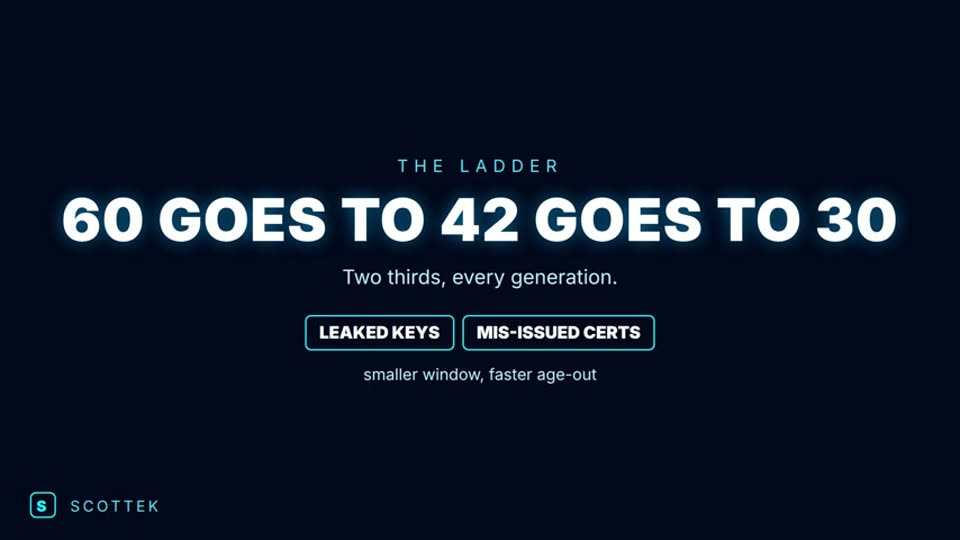
In the video: Let's Encrypt recommends renewing at roughly two-thirds of lifetime, which means day 42 on a 64-day certificate, and any timer hard-coded to 60, 80, or 83 days will silently start failing.
Added from the sources: the announcement states the two-thirds guidance explicitly for hard-coded renewals. Think of it as a ladder: day 60 on old 90-day certs, day 42 on 64-day certs, day 30 when 45-day certs arrive in 2028.
- Grep cron jobs, wrapper scripts, and runbooks for hard-coded day counts. That one search is half the homework.
- Clients that speak ACME Renewal Info (ARI) are mostly fine, because Let's Encrypt tells the client when to renew instead of relying on your timer.
Check your ACME client now
In the video: Caddy already supports renewal info, Certbot and acme.sh need recent versions, Traefik needs a manual fix, and Nginx Proxy Manager users should check for an update and test their own setup.
Added from the sources: client ARI support is secondary-sourced (two guides agree), so confirm against your client's own docs: Caddy speaks ARI since 2.8.0, Certbot since 4.1.0, and acme.sh since 3.1.4, per privatedevops.com, with renewal-timing background at bigiron.cc.
- Caddy users: confirm version 2.8 or newer and you are covered by ARI.
- Certbot users: confirm version 4.1 or newer; acme.sh users: 3.1.4 or newer.
- Traefik is the gotcha: its certificate code does not use ARI and renews on the
certificatesDurationschedule in your resolver. If you ever set that explicitly for 90-day certs, update it for the shorter lifetime now. This is the single most likely way a homelab wakes up to an expired certificate. - Nginx Proxy Manager: no version claim is verified here, so check for an update and test your own renewal.
Prove it in staging, then fix reloads and alerts
In the video: force a renewal on one host from staging, watch the logs, confirm deploy hooks actually reload the proxy, and set up expiry monitoring with Uptime Kuma or a simple OpenSSL check against port 443.
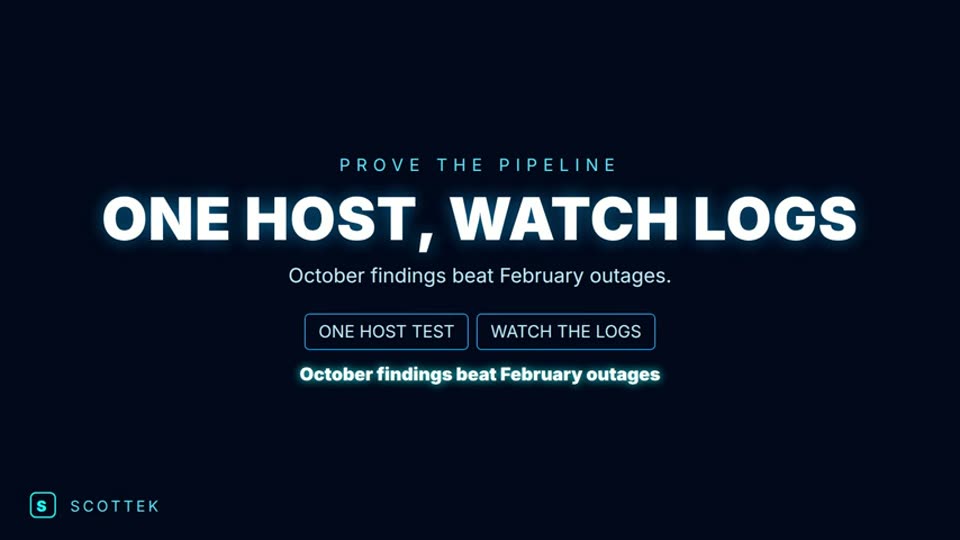
- Renewing the certificate file is only half the job: the proxy has to load the new file, so verify your deploy hooks restart or reload the service. This step is untested here.
- Add monitoring that screams before expiry: Uptime Kuma, a scheduled OpenSSL end-date check, or whatever you will actually look at. Alerting setup is untested here.
- Ask OpenSSL for any host's certificate end date today to see where you stand, then run one staging renewal this week.
The index card and next steps
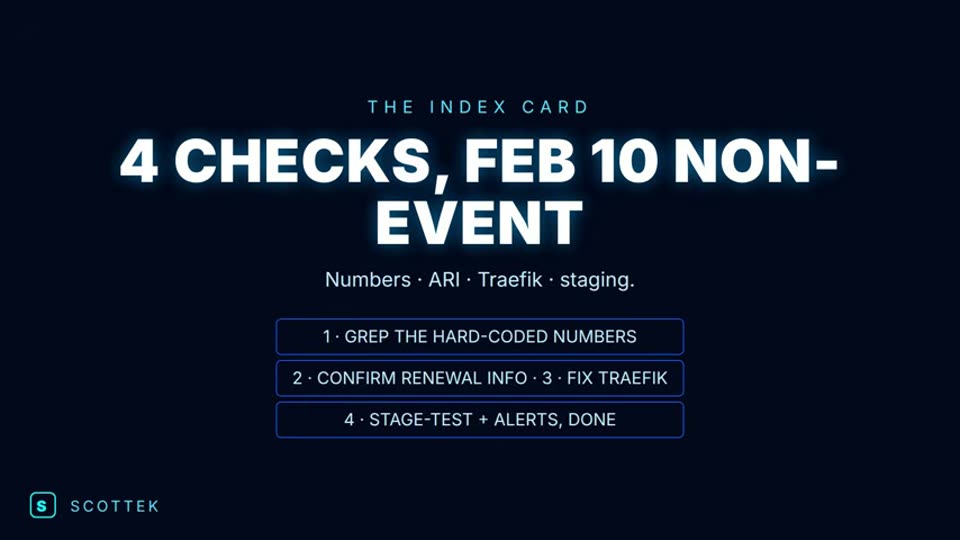
In the video: four checks make February 10th a non-event: grep the hard-coded numbers, confirm renewal info support, fix Traefik by hand, and stage-test plus alerts.
- Every hook, alert, and automation fix you make now carries straight through to the 45-day world of 2028.
- Related guides: remote access without open ports, single sign-on for homelab services, and network-wide ad blocking.